 | | Maxine Joselow | | What one utility CEO said after Biden left the room | 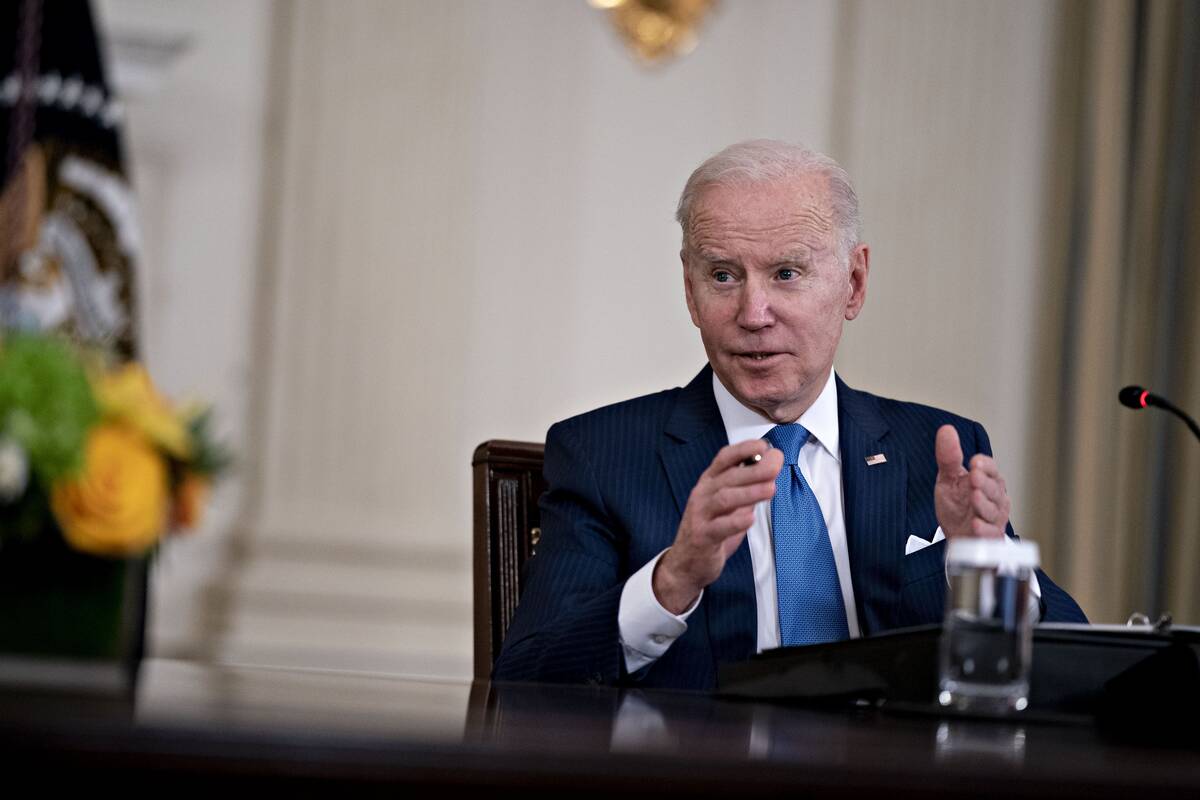 President Biden meets with electric utilities CEOs at the White House on Feb. 9. (Andrew Harrer/Pool/EPA-EFE/Shutterstock) | | | President Biden on Wednesday met with the chief executives of utility companies to discuss his Build Back Better agenda. But after about 20 minutes, the president excused himself and left the room, and the press and cameras were ushered out. What happened next is no longer a mystery. The Climate 202 spoke with Pedro Pizarro, the president and CEO of Edison International, the parent company of Southern California Edison, about the private discussion that ensued among executives and Biden administration officials, including White House Climate Coordinator Gina McCarthy, Energy Secretary Jennifer Granholm and National Economic Council Director Brian Deese. Pizarro said he expressed serious concerns about the costs of inaction on climate change, as the Build Back Better package — including its $555 billion in climate spending — remains stalled on Capitol Hill. "A lot of the discussion right now is focused on, 'What's the cost today for this program or that program?'" he said. "I'm worried there's not enough discussion of, 'What's the cost of inaction?'" He added: "The cost of not making investments now to harden the grid or to take carbon out of the economy … that's a cost that will be multiple the investments if we then have to deal with even worse effects of climate change down the road." | | Pizarro said the executives and Biden administration officials also had a robust discussion about the Build Back Better package's tax credits aimed at accelerating the nation's deployment of clean energy. | | Many of the executives expressed concern about a tax rule called normalization, which requires regulated utilities to spread out the benefits of tax credits over a long period of time. Critics say normalization has discouraged utilities from deploying clean energy by making it more expensive for customers. Pizarro said the executives argued that utilities should be able to opt out of normalization rules for storage and transmission projects. The tax credit for solar energy already includes such an opt-out provision. "We think it's important to have a level playing field," Pizarro said, adding, "We want to make sure those benefits flow to customers as quickly as possible." Tom Kuhn, president of the Edison Electric Institute, a trade association for investor-owned utilities, confirmed that normalization requirements came up in the private conversation. "There is an opt-out for normalization for solar, and so there's no real rational reason why you wouldn't want to also do storage and transmission," Kuhn told The Climate 202. "The bottom line is it benefits customers and it accelerates the energy transition." Of course, the political reality is that Build Back Better has stalled in the Senate amid opposition from Sen. Joe Manchin III (D-W.Va.). But backers of the clean energy tax credits argue that they're politically popular and could pass in a stand-alone bill. And at the very least, Congress will probably pass a tax extenders package by the end of the year that draws on these existing proposals. | Biden's clean electricity target | | It remains to be seen how Biden will meet his ambitious goal of achieving 100 percent carbon-free electricity by 2035. Even if Democrats manage to pass the clean energy tax credits in Build Back Better, they have already dropped plans for a Clean Electricity Performance Program (CEPP), which would have rewarded utilities for deploying more clean energy, because of Manchin's opposition. American Electric Power, whose president and CEO, Nick Akins, attended the meeting yesterday, circulated a letter to congressional offices in September that said the CEPP would force utilities to cut emissions "too rapidly," as E&E News's Benjamin Storrow reported at the time. | | Akins struck a different note on Wednesday, telling Biden, "For me, your focus on resiliency and reliability of the grid is extremely important. The addition of renewables in place today is having a substantial impact: the ability to save customers money." AEP spokeswoman Tammy Ridout added in an email to The Climate 202 that the utility shared "suggestions for improvements" to the CEPP with lawmakers, and it will "continue to work with Congress and the Administration on policies that will accelerate the development of clean resources while supporting a reliable, resilient and affordable energy system." | | |  | On the Hill | | Related: Biden's clean energy tax credits are the cheapest climate solution yet | 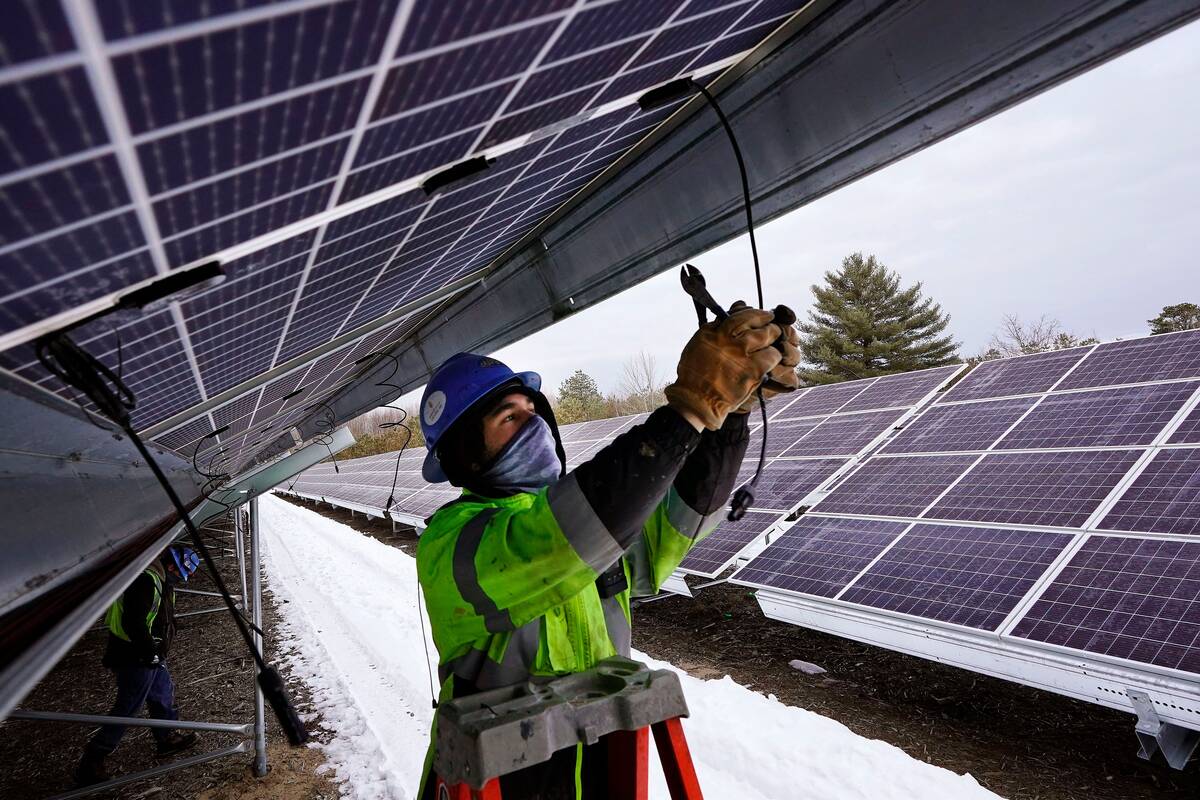 An electrician works on wiring solar panels in Oxford, Maine. (Robert F. Bukaty/AP) | | | The clean energy tax credits in the Build Back Better bill could be one of the most cost-effective climate policies in U.S. history, according to a new analysis by researchers at the University of Chicago and the Rhodium Group, an energy research firm, Robinson Meyer of the Atlantic reports. If enacted, researchers said the credits would cost the public only $33 to $50 to prevent one ton of carbon dioxide from entering the atmosphere — compared with most of the federal government's existing climate policies, which costs hundreds or even thousands of dollars per ton. The researchers also found that the credits' benefits would be three to four times as large as their costs, creating an estimated $1.5 trillion in economic surplus while eliminating more than 5 billion tons of planet-warming carbon pollution through 2050. | Grijalva, Hirono introduce bill to promote climate science at USGS | 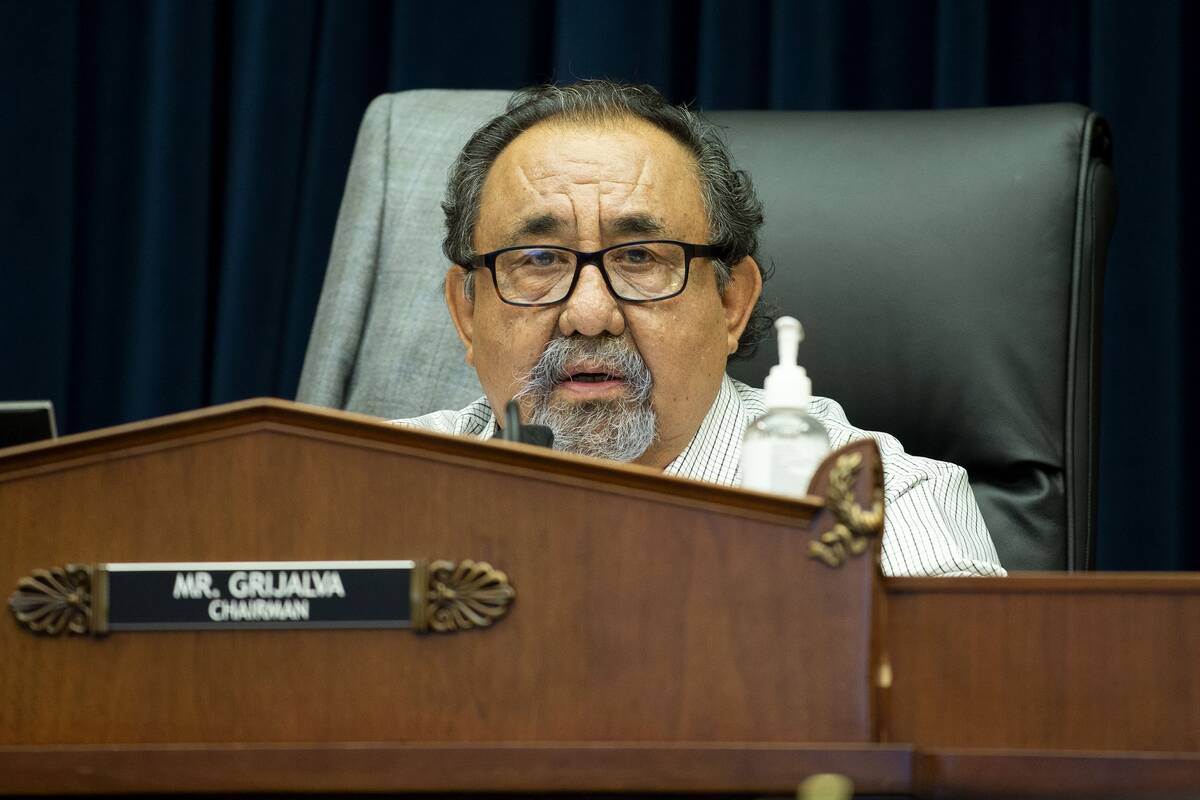 House Natural Resources Committee Chairman Raúl M. Grijalva (D-Ariz.). (Bonnie Cash/Pool/Getty Images) | | | House Natural Resources Committee Chairman Raúl M. Grijalva (D-Ariz.) and Sen. Mazie Hirono (D-Hawaii) yesterday introduced legislation to permanently authorize the U.S. Geological Survey's National and Regional Climate Adaptation Science Centers. The centers connect climate scientists at USGS and other research institutions with communities seeking protection from the impacts of climate change, from rising seas to stronger storms. The bill has 13 original co-sponsors in the House and five original co-sponsors in the Senate. The House Natural Resources Subcommittee on Energy and Minerals will hold a hearing on the measure next week. | | |  | Agency alert | | Biden administration lays out $5 billion plan for electric vehicle chargers across America | 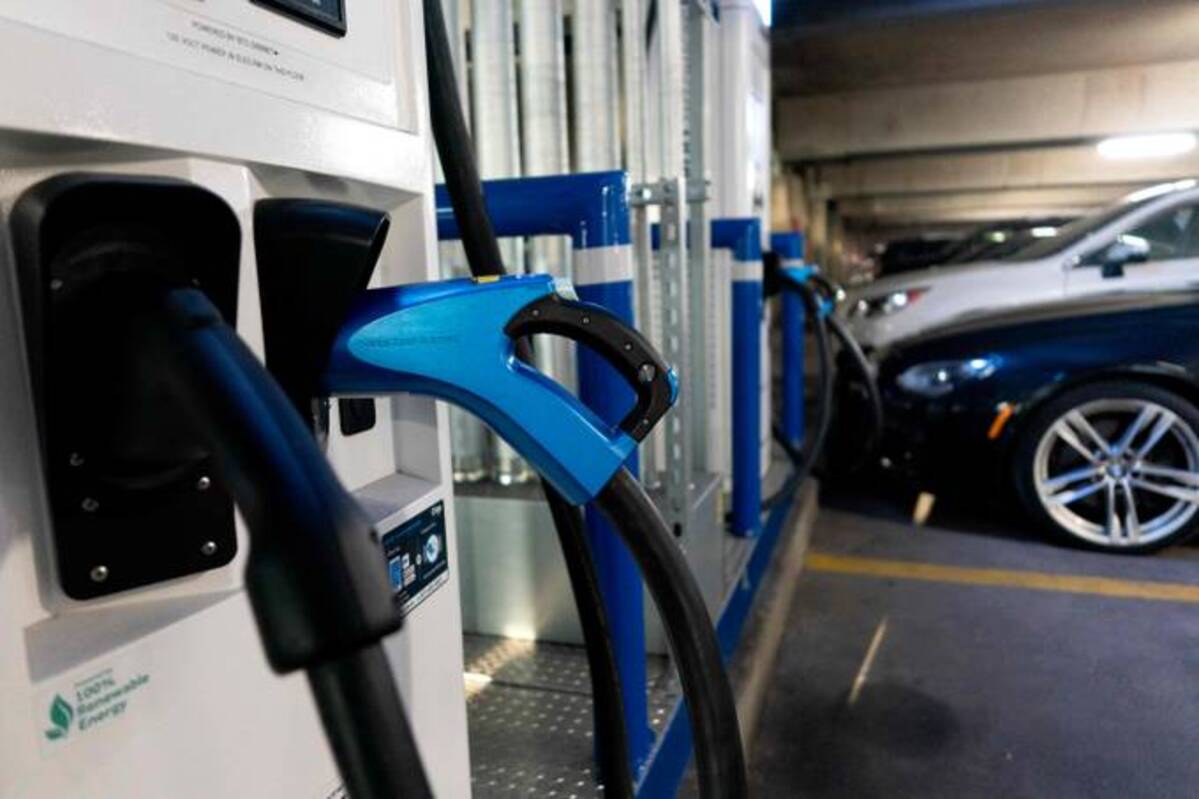 EVgo fast-charging stations for electric vehicles in Washington, D.C. (Stefani Reynolds/AFP/Getty Images) | | | The Biden administration today rolled out a plan for a $5 billion network of electric-vehicle chargers along interstate highways, The Washington Post's Ian Duncan reports. The money, included in last year's infrastructure legislation, will be shared over five years among states. The plan is geared toward promoting confidence in battery-powered cars by ensuring drivers will always have somewhere to plug in. The chargers mark one of the most significant investments in the approximately $1 trillion infrastructure law, helping push forward Biden's goal of reducing carbon emissions from transportation and having half of new cars be electric by 2030. The infrastructure legislation also includes another $2.5 billion that the Department of Transportation can use to target rural areas or city neighborhoods with poor access to charging. | In its first climate strategy, Army braces the service for harsher environments |  The U.S. Army prepares armored combat vehicles before deploying to Romania on Feb. 9 from Germany. (Alexandra Beier/Getty Images) | | | The U.S. Army released its first-ever climate strategy this week in an effort to prepare troops for a world plagued by the social and environmental effects of climate change, The Post's Michael Birnbaum reports. The Defense Department, which oversees the Army, makes up 56 percent of the federal government's total carbon footprint and 52 percent of its electricity use. The department laid out goals to cut the Army's emissions in half by 2030, electrify its vehicle fleet and add microgrids on all Army installations by 2035. The strategy — yet to be backed by a budget — also outlines an increased risk of conflict in places experiencing detrimental climate effects such as lower agricultural production and reduced access to basic needs. | | |  | Extreme events | | Super Bowl in Los Angeles could be the hottest on record |  Cincinnati Bengals quarterback Joe Burrow, right, warms up Feb. 9 in Los Angeles. (Marcio Jose Sanchez/AP) | | | A rare February heat wave traveling across Southern California this weekend could make Super Bowl LVI the hottest ever played, The Post's Matthew Cappucci reports. Sunday's game, in which the Los Angeles Rams will square off against the Cincinnati Bengals, will attract tens of thousands of fans to SoFi Stadium despite warnings from the Weather Service in Los Angeles to "avoid strenuous outdoor activities and drink plenty of water." The Weather Service also cautioned that "visitors from cold-weather states not acclimated to the heat may be at higher risk for heat-related illnesses," highlighting the extent to which rising temperatures are impacting the way Americans live and their pastimes. | | |  | Pressure points | | Dams alter river temperatures and threaten fish, yet 3,700 more will be built | 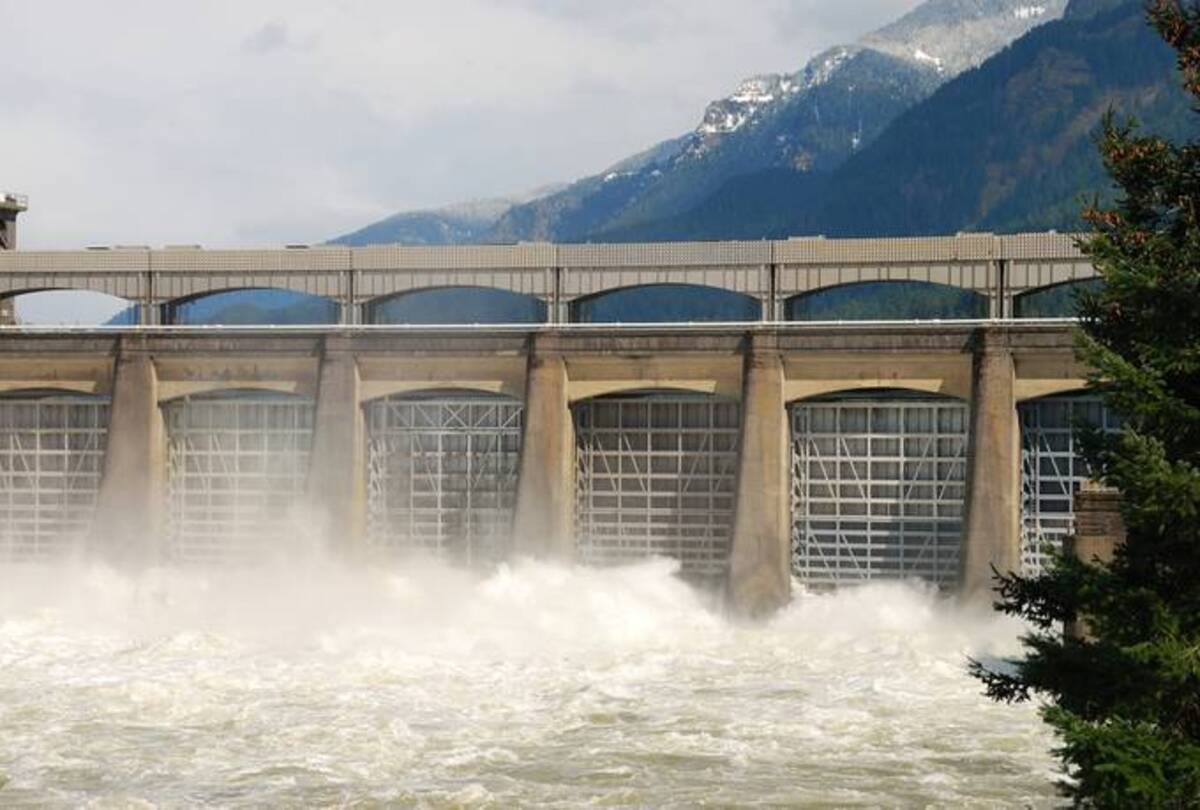 The spillway of the John Day Dam on the Columbia River in late winter. (iStock) | | | Dams — often built to combat flooding, meet heightened water demands and provide hydroelectric power — could be extremely disruptive to the environments they are placed in, The Post's Kasha Patel reports. The barriers alter river ecosystems by changing the temperatures in downstream waters and can endanger fish populations by blocking migration and modifying food supply. Despite the threat they pose, at least 3,700 new dams are planned for coming decades in places like South America and Asia, where people depend on river basins for their livelihoods. In a recent study, researchers analyzed downstream temperature changes for more than 100 existing dams and built a machine-learning algorithm that can predict such changes for dams under construction worldwide. In their initial assessment, researchers found that dams changed downstream temperatures by as much as 10.8 degrees Fahrenheit. And as climate change intensifies, river temperatures near dams are predicted to continue to get warmer. | | |  | Viral | | |






Comments
Post a Comment